
A specialist treatment programme for Lipoedema. Surgical fat reduction. Hormonal and inflammatory support. Long-term care.
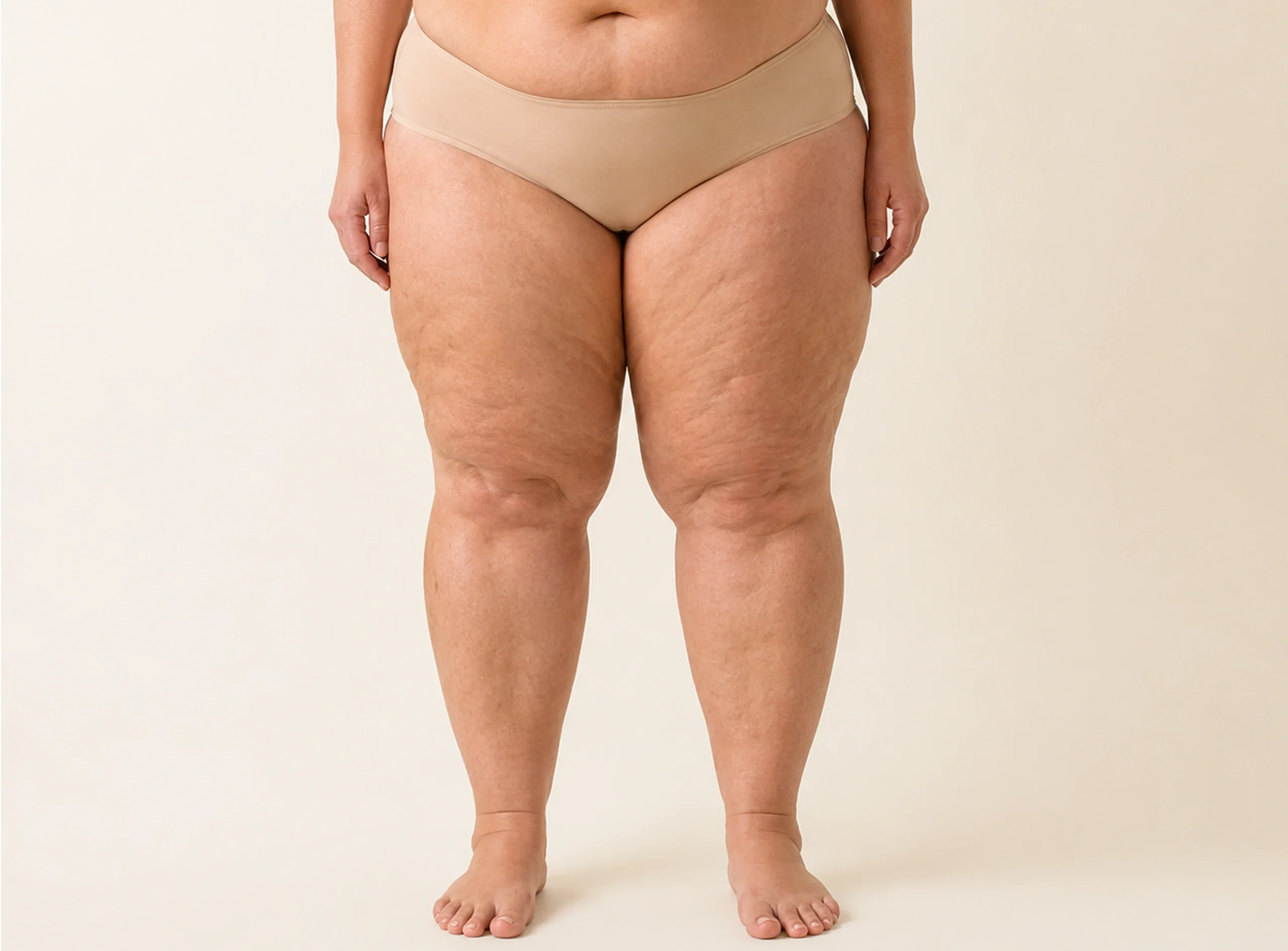
If you’ve watched your legs stay the same shape no matter what you eat or how often you train, you might be looking at Lipoedema. It’s a chronic disease of fat tissue, hormonally driven, structurally different from regular subcutaneous fat. Caloric deficit doesn’t shift it.
Most patients reach us after years of being told to try harder. Some have tried 800-calorie diets, marathon training, GLP-1 medications, intermittent fasting. The disproportion between upper and lower body persists.
Lipoedema needs a treatment approach designed for chronic fat disease, not for excess weight. Diagnosis first. Then surgical fat reduction. Then ongoing supportive care.

Most clinics treat Lipoedema with one tool: surgery. That removes the diseased fat. It doesn’t address the underlying disease state.
Our programme combines surgical fat reduction with the supporting work that determines outcomes:
Cosmetic liposuction targets even, well-distributed subcutaneous fat for shape. Lipoedema liposuction targets a fibrotic, lobular, painful fat that resists standard removal. The technique difference matters.
Some lipoedema patients don’t have liposuction. The aim is to reduce inflammation to such an extent that there is minimal or no swelling in the legs. If this is achieved, it may be possible to minimise abnormal fat growth.
The value of liposuction is that it removes abnormal fat and takes you back to a time when there was minimal abnormal fat. With a very anti-inflammatory lifestyle, you then try to prevent the fat growing back. The thin layer of fat left behind is still lipoedema fat, so liposuction is not a cure for lipoedema.
Some lipoedema patients who have liposuction will only have one area treated. Others might have multiple areas treated.
Sessions are scheduled 12 weeks apart, working systematically through the lower body and (if affected) the arms.
WAL uses a thin spray of fluid to dislodge fat with minimal trauma to the connective tissue and lymphatic vessels.
Standard Klein tumescent technique uses thinner cannulas.

Surgery doesn’t replace conservative care. It works alongside it.
We recommend or arrange:
Most patients combine elements rather than picking one. The right combination is usually identified through trial and individual response over months.

Lipoedema is hormonally driven. It typically begins at puberty. Pregnancy and menopause make it worse. Understanding the hormonal context affects treatment success.
We manage the full hormonal workup in-clinic. Dr Goedeke has 30 years of experience with bio-identical hormone therapy and oversees this side of treatment directly.
Treatment, where indicated, is bio-identical hormone therapy. Bio-identical progesterone is the most common intervention for Lipoedema patients. Specific dosing and protocols are discussed at consultation based on your individual results.
Most Lipoedema patients are low in progesterone, which matters because progesterone supports tissue health and modulates the oestrogen-driven aspects of Lipoedema fat behaviour. Progesterone also has diuretic effects, which may result in some reduction in lower limb swelling.

Lipoedema is chronic. Even after successful surgical treatment, the underlying disease state remains. Some habits become permanent fixtures.
Compression continues to be useful, particularly during exercise, long flights, hot weather, and pregnancy. Most patients shift to lower-grade garments after surgery and wear them as needed rather than daily.
Diet matters. Inflammation drives Lipoedema fat behaviour. The most effective long-term patterns are anti-inflammatory by design: Mediterranean, RAD, ketogenic for those who tolerate it, or hybrid approaches. Carbohydrate quality matters more than quantity for most patients. Patients need to be gluten free.
Exercise approach matters. High-impact training tends to inflame the affected tissue. Low-impact and water-based movement tends to help. Walking, swimming, rebounding, cycling.
Mental health support is a real part of long-term care. A condition ignored for years and dismissed by medical professionals leaves marks. Therapy helps. So does community.
Most NZ patients self-fund Lipoedema treatment. The public health system doesn’t currently fund it. Health insurance varies and rarely covers cosmetic-classified procedures, even when the medical case is clear.
Total cost depends on stage, body areas treated, and number of sessions required. Per-session cost typically falls between $9,000 and $15,000. We provide a specific quote at consultation. The full breakdown sits on the cost page.
If you’ve been told it’s “just weight gain,” and you have not found the answer, this is the right next conversation.

